
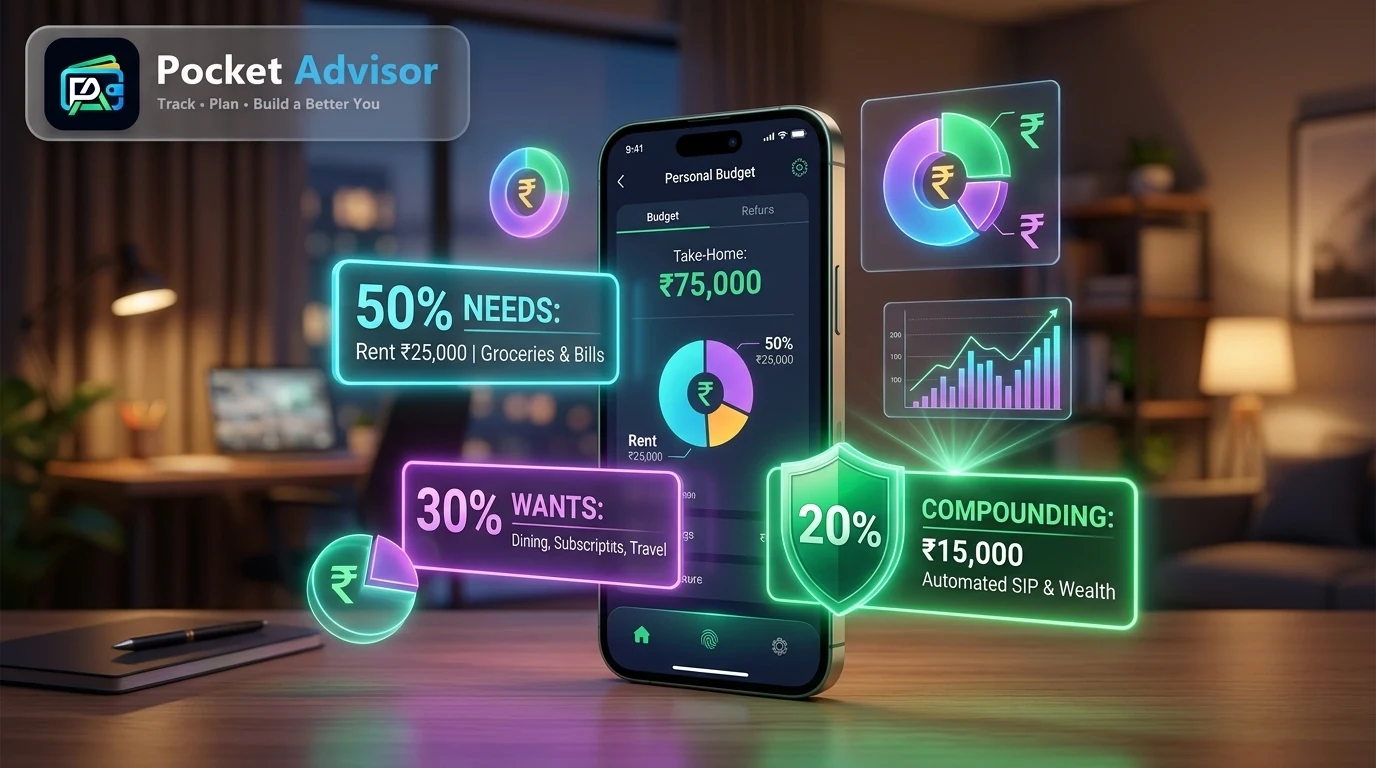
Every month across India, millions of working professionals experience the exact same cashflow mystery: salary hits their bank account on the 1st, and by the 20th, the balance has mysteriously vanished into a blur of rent, groceries, quick-commerce orders, electricity bills, and dozens of micro-scans via UPI.
Traditional Western budgeting books tell you to allocate exactly 50% to needs, 30% to wants, and 20% to savings. But when you live in Indian metros like Bengaluru, Mumbai, Gurgaon, or Hyderabad, realistic living costs rarely fit neat textbook formulas. Metro rents alone can eat 35% to 45% of your take-home pay, domestic help and society maintenance are non-negotiable fixed costs, and family obligations demand recurring support.
To build long-term wealth without feeling perpetually constrained, Indian earners need a practical, culturally grounded budgeting blueprint. This guide breaks down how to organize take-home pay, establish realistic living expense envelopes, handle festival surges, and utilize free interactive tools like the Monthly Budget Planner and 50/30/20 Salary Guide.
1. Why Standard Budgeting Rules Fail in Indian Metros
Before dividing your salary, recognize the structural realities unique to the Indian urban middle class:
The 4 Unique Indian Cashflow Pressures
- ✓ Skyrocketing Urban Rents: Premium tech hubs in Whitefield, BKC, or Cyber City often demand 30%–45% of entry-to-mid career salaries, plus 5-10 months of locked security deposit capital.
- ✓ Invisible UPI Friction: Frictionless QR code scans turn ₹30 tea breaks, ₹150 quick-commerce deliveries, and ₹400 ride-hailing trips into 60+ unrecorded monthly transactions.
- ✓ Intergenerational Family Remittances: Supporting parents with medical insurance, home utility bills, or direct monthly transfers is a non-negotiable cultural priority.
- ✓ Lumpy Festival & Wedding Spends: Diwali, Raksha Bandhan, wedding seasons, and annual school fees hit in sudden clusters rather than even monthly distributions.
2. The Adaptive 50/30/20 Framework for India
Rather than forcing rigid percentages, adapt the formula based on your city tier and income level:
| Take-Home Monthly Pay | Needs & Essentials | Lifestyle Wants | Savings & SIPs | Recommended Rule |
|---|---|---|---|---|
| ₹35,000 (Fresher / Junior) | ₹21,000 (60%) | ₹7,000 (20%) | ₹7,000 (20%) | 60 / 20 / 20 Adaptive |
| ₹75,000 (Mid-Level) | ₹37,500 (50%) | ₹22,500 (30%) | ₹15,000 (20%) | 50 / 30 / 20 Classic |
| ₹1,50,000 (Senior / Dual-Income) | ₹60,000 (40%) | ₹37,500 (25%) | ₹52,500 (35%) | 40 / 25 / 35 Accelerated Wealth |
3. Step-by-Step Blueprint to Structure Your Monthly Budget
5-Step Monthly Budget Execution System
- Audit Your True Net Take-Home Pay
Count only the cash deposited into your salary account after EPF, gratuity, and TDS deductions. Exclude potential annual bonuses, ESOP liquidity, or travel reimbursements from regular baseline budgeting.
- Cap Fixed Living Essentials First
List rent, society maintenance, domestic staff (cook/maid), electricity, water, Wi-Fi, and term/health insurance premiums. Ensure these do not exceed 55% of net income.
- Establish Sinking Funds for Annual Dues
Divide annual motor insurance, festival shopping, and medical out-of-pocket costs by 12. Transfer this monthly slice into a separate high-yield savings pocket or sweep-in FD.
- Automate Compounding on Salary Day
Schedule auto-debits for your equity mutual funds and emergency fund contributions between the 1st and 5th of each month using our Step-Up SIP Calculator.
- Track Daily Discretionary Spends Privately
Use automated on-device expense tracking to monitor dining, quick commerce, and weekend leisure without typing every transaction manually into spreadsheets.
4. Eliminating the 'Ghost Spends' in UPI Transactions
The primary reason Indian budgets fail isn't large planned purchases—it's small, unrecorded daily digital payments. Scanning ₹40 for morning chai, ₹120 for an auto ride, and ₹250 on a food delivery platform feels insignificant in isolation. But 4 micro-transactions per day amount to over ₹12,000 every month in untracked discretionary outflow.
Traditional expense apps require you to manually open an app, select a category, and type amounts after every purchase. Within two weeks, manual tracking fatigue sets in. By contrast, Pocket Advisor uses on-device SMS parsing under Google Play's financial exception to auto-detect verified bank debit alerts in real-time, storing transactions securely in local SQLCipher encryption with optional cloud backup.
Calculate Your Monthly Budget Allocation Now
Use our interactive web planner to balance Needs, Wants, and Investments with instant 50/30/20 visualization and CSV export.
Launch Monthly Budget Planner →